

How to Start Investing When You Don’t Know Where Your Money Actually Is ?

Tirnu — Investing
How to Start Investing When You Don’t Know Where Your Money Actually Is
Most investing advice skips the hardest part. Before you can grow your money, you need to find it.
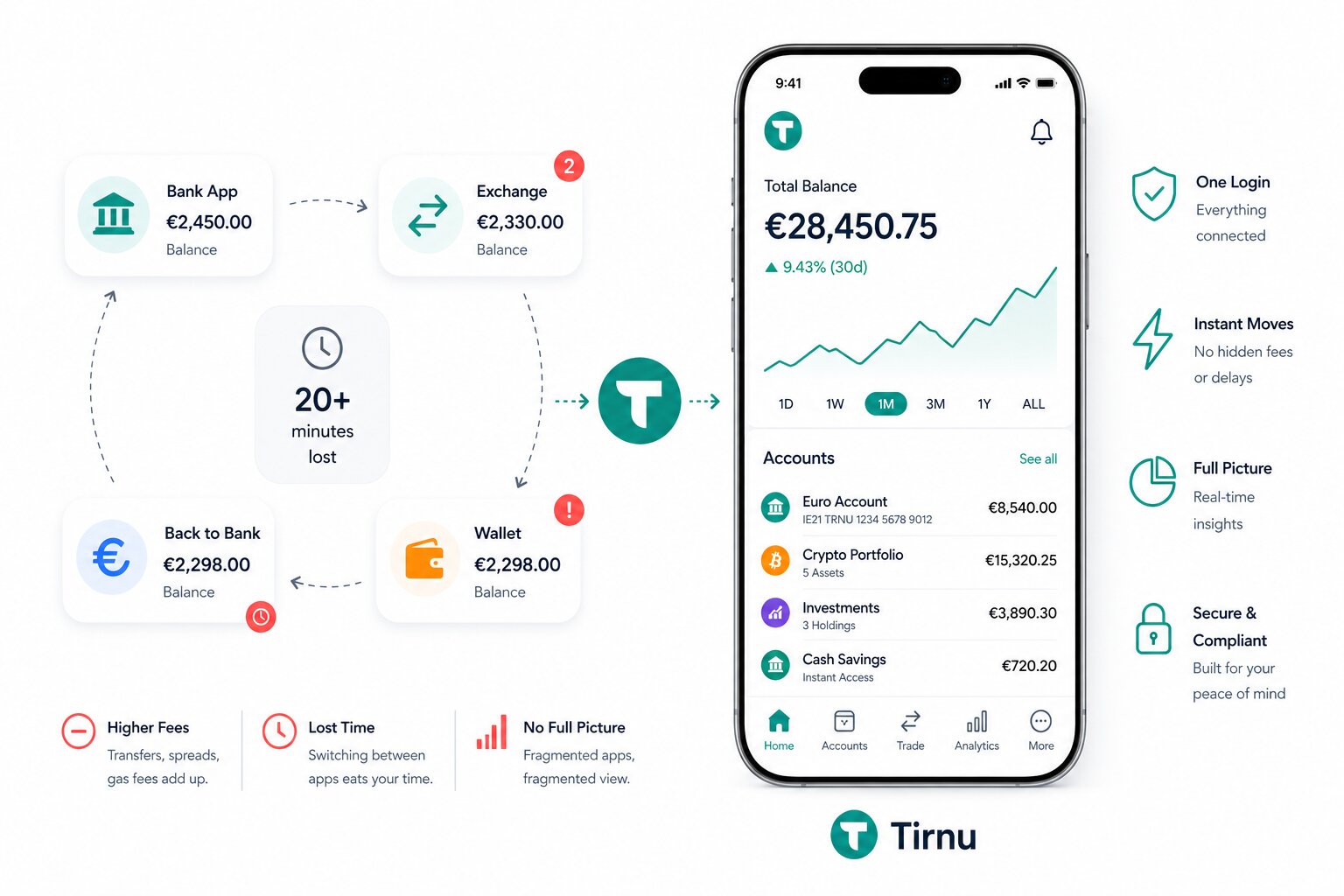
There’s a particular kind of financial paralysis that nobody talks about. It’s not the paralysis of not having enough money. It’s not the paralysis of not understanding the markets. It’s the paralysis of opening three different apps, seeing three different numbers, and still not knowing what you actually have to work with.
If that sounds familiar, you’re not behind. You’re just dealing with a problem that most financial advice was never designed to address — because most financial advice was written for a world where everyone had one bank account, one savings pot, and no crypto.
That world doesn’t exist anymore. And the investing advice needs to catch up.
Why “Just Start Investing” Is Terrible Advice
The most common piece of investing guidance you’ll read is some version of: start early, invest consistently, don’t time the market. All of that is true. None of it is useful if you genuinely don’t know what your starting point looks like.
Think about what the average person’s financial picture actually looks like today. A current account for bills and salary. A savings account that may or may not be at the same bank. A crypto exchange account with some Bitcoin or Ethereum bought during a moment of conviction. Maybe a wallet those assets were moved to for safekeeping. Possibly a stocks app downloaded during lockdown that still has a few hundred euros in it.
Each of those is a separate login. A separate balance. A separate set of transaction history. And none of them talk to each other.
Before you make a single investment decision, you need to answer one honest question: what is your actual net worth right now, across everything? Most people genuinely cannot answer that without spending twenty minutes collecting numbers from multiple places. And if you can’t see the whole picture, you can’t make good decisions about any part of it.
“The first act of investing isn’t picking an asset. It’s knowing what you already have.”
The Audit You Need to Do Before Anything Else
Before you invest a single euro, do this. Write down every place your money currently lives. Not just the big accounts — everything. The exchange you signed up for two years ago. The savings account you opened for a holiday fund and never closed. The crypto wallet with assets you forgot to sell.
Next to each one, write three things: the current balance, when you last looked at it, and what you’re actually doing with it. You’ll likely find accounts that are doing nothing, assets you’re not actively managing, and money sitting somewhere earning less than it should.
This isn’t a fun exercise. But it’s the only honest starting point. Because investing without knowing your baseline is like trying to navigate without knowing where you currently are.
Most people who feel “not ready to invest” aren’t actually lacking capital. They’re lacking clarity. The moment you can see everything in one place, the decision of what to do next becomes significantly easier.
The Five Steps to Get From Chaos to Clarity
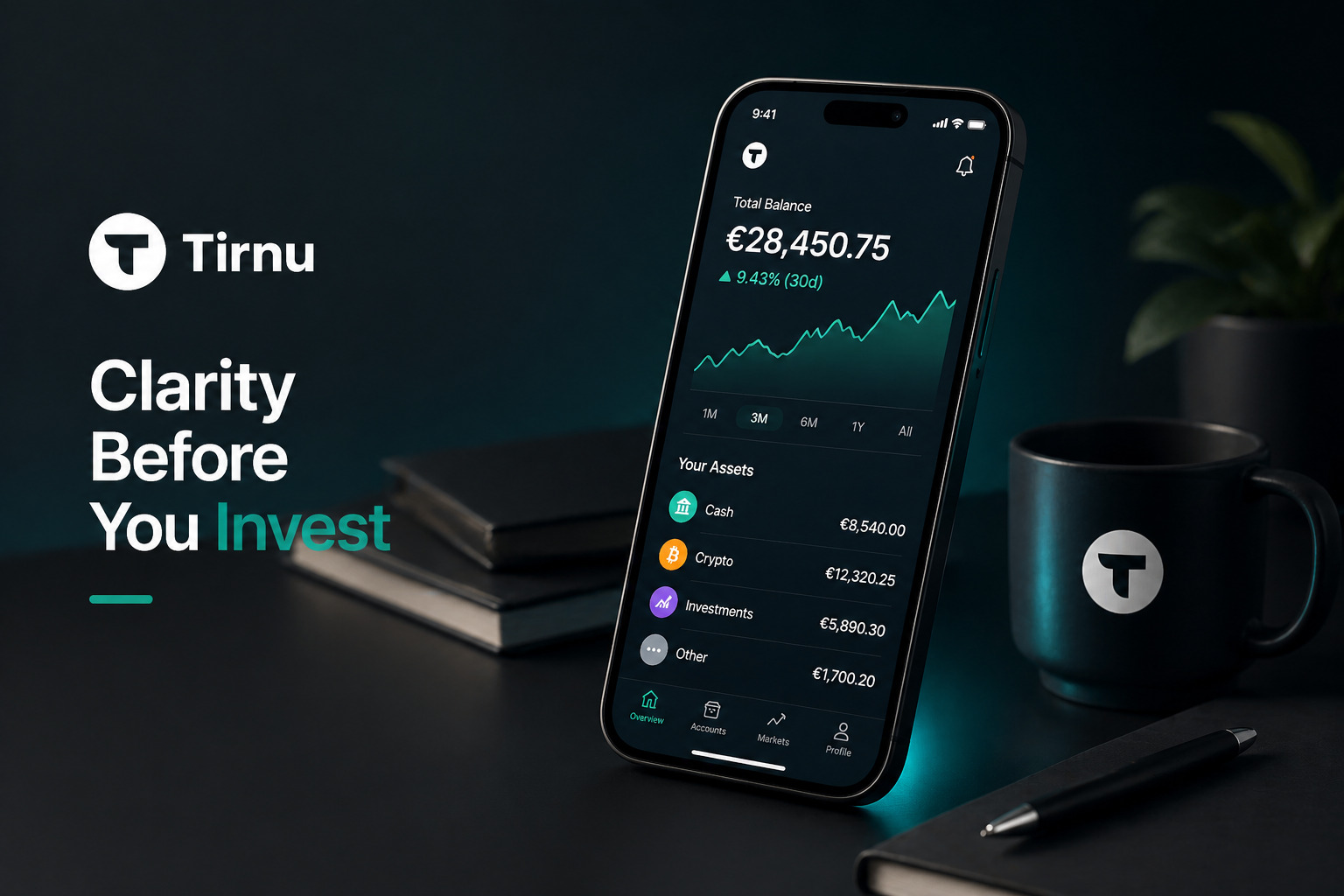
You don’t need to move everything into one place immediately. You do need to see everything in one place immediately. Use a platform that aggregates your fiat and crypto balances into a single dashboard. That single view changes how you think about your finances overnight.
Once you can see everything, split it into two categories: money that is actively working toward something (savings with a purpose, investments, crypto you’re holding with conviction) and money that is just sitting there. Idle money is the first thing to put to work.
Before you choose which crypto to buy or which fund to invest in, decide roughly how you want your total portfolio to look. What percentage in cash? What percentage in crypto? What percentage in longer-term assets? Even a rough answer to this question gives you a framework for every decision that follows.
One of the most underrated reasons people don’t invest consistently is that the process is too cumbersome. If acting on a decision requires logging into three platforms, transferring funds, waiting for settlement, and then executing a trade — most people will find a reason to do it tomorrow instead. Reduce the friction and the consistency follows naturally.
The investors who make the best decisions are rarely the most sophisticated. They’re often just the most informed about their own situation. When your portfolio is visible in real time — all of it, not just the parts that live in one app — you respond faster, rebalance more naturally, and panic far less.
Why the Platform You Use Matters More Than You Think
None of the above is particularly complicated in theory. In practice, it’s made needlessly hard by the tools most people are using. Traditional banks weren’t built to show you your crypto. Crypto exchanges weren’t built to show you your savings. The result is that getting a complete picture of your finances requires manual effort every single time.
This is precisely the problem Tirnu was designed to solve. By combining a real IBAN account with integrated crypto wallets and a unified portfolio view, it gives you the one thing that makes every other financial decision easier: a complete, real-time picture of where your money actually is.
When your salary arrives, you can immediately see how it fits into your overall financial picture and decide where it should go. When crypto markets move, you can see the impact on your total net worth — not just your exchange balance. When you want to rebalance, you can do it from the same place you track everything, without transfers, delays, or switching apps.
The platform is not the investment strategy. But it is the foundation that makes a coherent investment strategy possible.
The Uncomfortable Truth About Waiting
There’s a version of this story where you spend six more months meaning to sort out your finances before you start properly investing. You know the version. The apps stay scattered. The balances stay unchecked. The idle money keeps sitting in an account earning almost nothing. And the gap between where you are and where you want to be quietly widens.
The barrier to starting is almost never knowledge. Most people know what they should roughly be doing. The barrier is clarity — not having a clean enough view of their current situation to feel confident taking the first step.
So start there. Not with picking assets. Not with researching funds. Start with getting a single, honest view of everything you already have. That one step removes more paralysis than any amount of market research.
Once you can see where your money actually is, the question of where it should go becomes a lot easier to answer.